
American Pachuco | Made in America
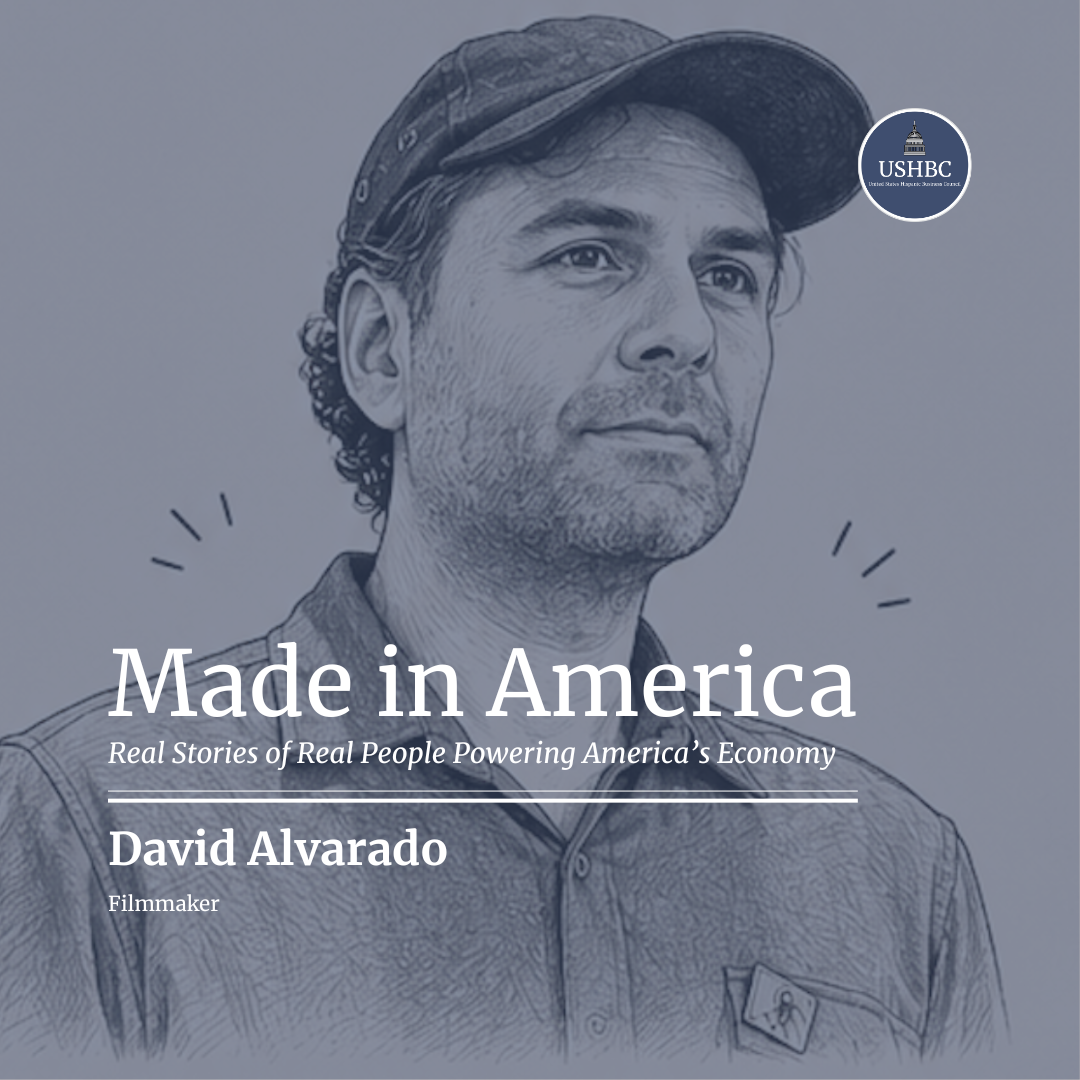
Upon the release of American Pachuco, Sergio Muñoz interviewed the filmmaker David Alvarado, René Millán, Tlaloc Rivas and Amanda Salazar. Below is the excerpt for the interview with David Alvarado and the link for the long read.
“It’s about identity, it’s about belonging in America. We felt like it would just became a challenge and a good challenge for us to try to get that word into the American lexicon because a Pachuco really is an American phenomenon. There was a lot of interplay between the border from America to Mexico with the idea of the Pachuco. But it’s a very American story in that, this is how people came to the country. They had to identify as not Mexicans anymore, but as Americans and what is that identity like? So that struggle was something we wanted to highlight.” - David Alvarado
Sergio: You’ve screened at Sundance, Film Festivals, New York, Los Angeles … at the screening that I saw, it was very elderly, niche industry, pachucas and pachucos, do you have a sense for what general audience Gen Alpha might think of this Chicano universe that is somewhere between Bertolt Brecht and Cantinflas?
David: It certainly is a discovery for a lot of people. I made the film for two audiences, the first row was for the Chicanos that know the story of Luis Valdez and I didn’t have to explain a thing to them but I wanted to give them a cinematic tribute to his life. The second row behind them was for the people who had never heard of Luis Valdez. Some of those people may have heard of La Bamba and they may start singing it but they don’t know much behind the scenes. We have Edward James Olmos reprising his role as El Pachuco and the first line in the movie, a line I wrote is: Ladies & gentlemen, it has come to my attention that some of you don’t know the story…. that’s one of a thousand things that was our effort to help folks along. I gotta tell you, there’s not a lot of Chicanos in Park City, Utah so I was curious how it was going to play and we were blown away by the reception and we got the audience award. I think it registers because we are at a moment in our time when the question of: Who belongs in America? Luis always addresses that question so now is the perfect time.
Sergio: What did your Mexican father expect of you at the age of 16 in Texas?
David: I was a troubled kid and I didn’t fit in to the culture in suburban Dallas, Texas. He was always trying to get me work with his buddies but I was interested in the arts and I didn’t see the path from school to the arts. I wanted to be with the skate kids and the punks. I remember telling him that I wanted to go to film school and he responded with, I think you should go to business school. He, rightly, thought that I had a good business acumen and I was so rebellious. When I did end up going to college, I met Luis Valdez and he showed me a path.
Sergio: It seems to me that you became an experienced documentarian shooting challenging edge scientific concepts. Aubrey de Grey, Bill Nye, Stewart Brand and then, you come back to a meeting you had with Luis Valdez. After watching the Immortalists, I can’t help but think that through Luis Valdez and through Eddie Olmos and through your audio narration, El Pachuco actually has the ability to become immortal. What say you?
David: I think he was immortal before I was born. A bomb dropped on that stage in 1978. I just tapped into it in 2022. I never saw the play production, just the film version. It was Shakespearean. El Pachuco was a Puck figure that could freeze time and space and interact with the audience. I ended up thinking: Wouldn’t it be great if that same character had the same power and find his way into the documentary about his creator’s life story. It is a continuation of the power of that character.
Sergio: In the evolution of your career as a filmmaker living in Brooklyn making thoughtful documentaries, what do you think Prosperity means to you?
David: As an artist, I wake up every morning and I brew a giant cup of coffee and I have an office in my house and it takes a lot of discipline and I’m exhausted at the end of the day and I just feel privileged. I wasn’t born in privilege, I paid my way through college, I ate ramen noodles for the first half of my career. When I made The Immortalists, I was living on people’s couches. But now I am midway through my career and I know what I am doing and I’ve given up on pitching the streamers. They didn’t pick up on American Pachuco. Luis did it this way and I am too. Nobody is opening up the gate for me, you just have to jump the wall. I’ve been doing that all my career and I am going to continue to do that. I wouldn’t trade it for anything.
Sergio: Taylor Hackford has been speaking in several different spaces about the business success of La Bamba. If you ask me, after the era of La Bamba, I think Latino forward theater fell off a cliff. Why if it was such a business success did that happen? I think given what I’ve seen, you could be the Latino Taylor Sheridan making Latino stories in the Fort Worth area.
David: Luis talks about that a lot. Tyler Perry, Oprah, it makes good business, I may be able to build a little empire. Let’s see how that goes. I’d love to do more with the Luis Valdez story because we only touched on half his career. We are making the recordings available to UC Santa Barbara. We are doing the theatrical distribution ourselves out of pocket. We are launching a Kickstarter. We did a successful one with the Bill Nye documentary, so let’s see if the younger generations are interested in crowdfunding.
#Intelatin #Media #Film #Documentary #AmericanPachuco #LuisValdez #DavidAlvarado #ZootSuit #LaBamba
Sergio C. Muñoz is a Mexican banker writing on Latina/o Prosperity. His work has been featured in the US Hispanic Business Council; Caló, the Los Angeles Times, the OC Register, PBS, NPR, WNYC, Revista - Harvard Review of Latin America, Studio 360, Latino Leaders Magazine, Poder Hispanic, Sopitas, Animal Político & ¿México Cómo Vamos?
To support my work, please consider purchasing a sample of salt from our sponsor, Santa Prisca & Co: https://bit.ly/Intelatin
Explore More Stories From America’s Small Business Community: Made in America