
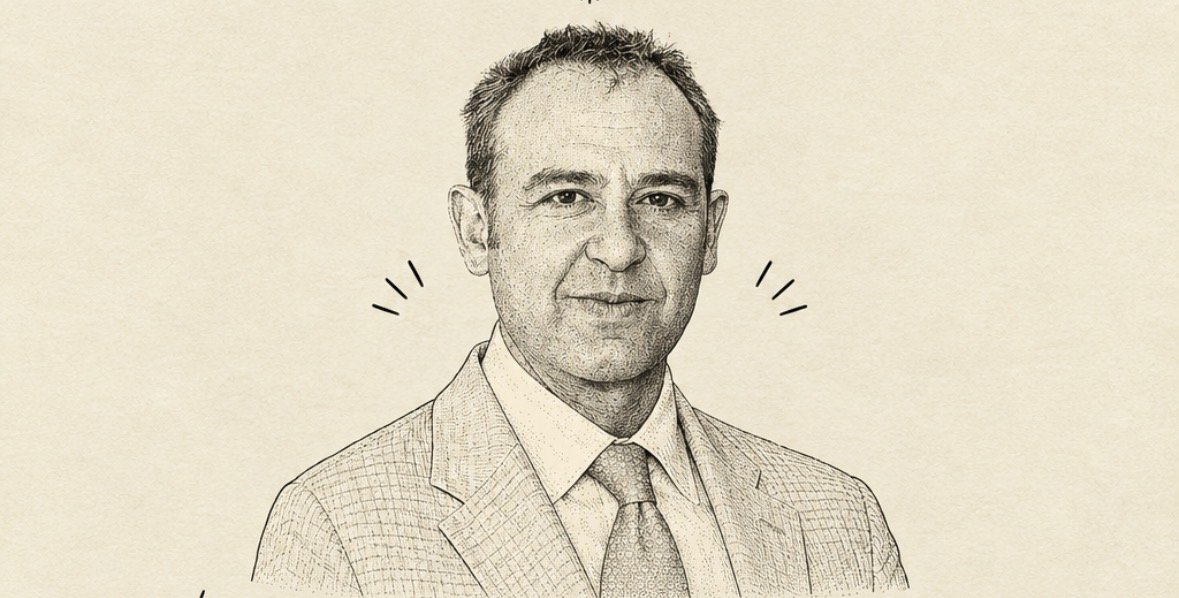
Arturo Sarukhán - Ambassador | Made in America
The following is the transcript of an interview between Sergio Muñoz and Arturo Sarukhán
Sergio: don Arturo, how do you identify?
Arturo: I was born in Mexico, therefore I am very proud of being born there. Both my families are refugees in Mexico. So, I am Mexican but I do believe in this idea of a bi-cultural, bi-lingual, bi-national community of Mexicans and Americans joined at the hip for the common good. So, I’d say both Mexican and North American.
Sergio: Please describe your childhood home?
Arturo: My parents built the home with a lot of effort. Both are scientists, biologists. They arrived as refugees in Mexico with just the clothes on their backs. They had to to work hard and they were finally able to build a home from scratch. I lived there for most of my teenage life. The home was made of brick and had a tiled roof with a central patio with a fountain. It was a semi-urban area with lots of greenery and trees and a natural ravine in front of the house. It was the place where we learned to love Mexico and to cherish public service. To have the good fortune of living in a tight knit nuclear family. It was just my parents, me and my younger sister. Most of my paternal family was killed in the genocide of the Armenians in Constantinople. On the maternal side, we came from the republican refugees who lost the civil war against Spain and so when Franco finally died, a lot of them went back to Spain. We did not have all the primos, the typical big Mexican family, it was a relatively compact family environment. This was in La Herradura in Estado de México crossing just outside of Mexico City.
Sergio: What was expected of you at the age of sixteen?
Arturo: It wasn’t immediately clear to me what I wanted to do but I had a clear sense to do something like what I ended up doing. I didn’t know that I would be a career diplomat but I was interested in public service and international politics. My parents were disappointed because they were all scientists and I think they wanted me to go down that path. I was very restless. I left in the last year of high school from Mexico. I was very interested in the Sandinista movement and the alphabetization campaigns to recover territory from the Somoza dictatorship. I had long hair and I was a hugely interested in soccer. I played goalkeeper. I still play. At the time, I played in three different leagues and made a close group of friends that became my besties until present-day.
Sergio: Where did you find yourself socio-economically at the time?
Arturo: I was painfully aware of Mexico’s achilles heal which is the polarization of income and inequality. Mexico is so unequal. I lived in the UK during my youth and although there were differences of class, it wasn’t like it was and still is in Mexico. I remember that during my teenage years, I had a professor that was very socially aware and we worked in under-privileged areas of Mexico City. It was focused on healthcare or mental healthcare and clean water as well.
Sergio: Was the PRI influential in your life?
Arturo: Certainly, as they were in power for 70 years and it wasn’t until 2000 when they were kicked out of office. The jingoistic, nationalistic environment … I became of age when Mexico started to understand the critical role that the United States played in Mexico’s well-being, security and prosperity. I was fully aware as a young undergrad student of the enormous importance of the immigrants of Mexico in the US economy. I was one of the first waves of young Mexican professionals who came to the US to do graduate work in foreign policy in the United States during the Salinas administration. We knew our painful 19th century history and yes, we understood the asymmetry of power that existed between Mexico and the US, but we also believed in the unique advantages of deepening and really building a mutually respectful and synergistic relationship between the two countries. We also believed in changing the paternalistic approach to Mexicans in the exterior because they were seen by many, even in the political class, as traitors. It was my generation that began to communicate how valuable they really were and we changed the paradigm of the diaspora community in the United States.
Sergio: I met you in the 90s in Washington DC and since you live there still, do you consider that you have an immigration story?
Arturo: A year ago, I was in Mexico on business and I was flying to Chicago. I was in my seat and someone on the plane said hello to me and about an hour into the flight, he came me a little dog made of black pottery from Oaxaca. He thanked me for being such an important contributor in New York in the Consulate and for the speaking up for Mexicans as the Ambassador. It improved their daily lives in the US but also how they cherished their roots and how they carry Mexico in their souls. It was such a moving moment for me.
Sergio: Can you describe your home present-day?
Arturo: It is a semi-urban area, a green area in Bethesda. It is an old area. It’s a mixed zone with both old houses and new houses. A lot of the houses are related to the Washington political area. A very blue, pro-democratic area with academics, government, consultants, think-tanks, it’s a very typical Washingtonian area. It is made of nickel-gap. A white traditional house with a modern feel to it. Steel roof instead of slate roof. I live with my wife and my youngest daughter and my eldest daughter is with us while on holiday.
Sergio: In terms of digital diplomacy, I am going to channel into the issue of wealth inequality. The Federal Reserve says that Latinos have not purchased even 1% of the value of the stock market in comparison to to white Americans with 90%. How do we change that percentage after all this time?
Arturo: It is a critical component of the economic empowerment of the Latino community in the US. It’s not only a gap vis-a-vis white Americans, it’s also a gap between Latinos itself because purchasing power has risen significantly, the number of businesses owned by Latinos has grown very significantly, the contribution to the US GDP has risen dramatically every year but they haven’t translated that growing economic clout to his issue that you have underscored. It is my impression that it will grow slowly as you see more Latinos join corporate boards and as you see more and more Latino households dip their feet into the market. There needs to be more education for sure. There is a lot of work that needs to be done to empower our community economically.
#Intelatin #Media #DigitalDiplomacy #ArturoSarukhan #Ambassador #Mexico
Sergio C. Muñoz is a Mexican banker writing on Latina/o Prosperity. His work has been featured in the US Hispanic Business Council; Caló, the Los Angeles Times, the OC Register, PBS, NPR, WNYC, Revista - Harvard Review of Latin America, Studio 360, Latino Leaders Magazine, Poder Hispanic, Sopitas, Animal Político & ¿México Cómo Vamos?
To support my work, please consider purchasing a sample of salt from our sponsor, Santa Prisca & Co: https://bit.ly/Intelatin
Explore More Stories From America’s Small Business Community: Made in America