
Daniel Hernández, Journalist | Made in America
The following is the transcript of an interview between Sergio Muñoz and Daniel Hernández
Sergio: How do you identify?
Mexican American; Californian; Fronterizo
Sergio: Please describe the house where you were raised as a child…
A ranch house style, modern, my father being an immigrant, he remodeled and repainted it many times. A clean standard house with a door in the middle and two windows on each side. When I was a child, I lived there with my mom, dad, brother, sister brothers plus a lot of half siblings and we all grew up together as a unit in different iterations. It was important for us to see how my father was buying property to try to and get us into bigger houses. That influenced me a lot.
Sergio: Let’s double-click on that. How did your immigrant dad know about laddering?
My father was born in Tijuana. My grandmother was very financially minded and frugal and she probably instilled that thread in him. I think he was a good old fashioned immigrant influenced by American prosperity culture. He was inspired by the ethos of the American dream. My father was born in 1945 and he left Tijuana in the early 60s.
Sergio: What is your family’s immigration story?
Tijuana and San Diego are sister cities. My parents represented the culture of Tijuana and it was very normal to go back and forth. My father first lived in San José with my tio Raúl and then he lived in Tracy with my tio Héctor. He rejected going to university in Mexico like his mother had wanted him to.
Sergio: Let’s talk about Daniel at age 16. Did you understand your socio-economics in your barrio in San Diego?
I think we were better off than most around us. Maybe, right in the median. My mother’s side lived in poverty but my father’ side did not. My paternal grandmother was a nurse and they had careers and jobs. I was able to buy lunch but I wasn’t able to do extra classes. There were a lot of hand-me-downs. We did have Christmas gifts and family trips so it felt like a middle class existence but not with abundant resources to pursue our dreams and our passions as teenagers.
Sergio: You must have been nerdy if you made it to Berkeley…
I’ve had visions of being a writer since I was five years old. I was editor of my high school paper, both junior and senior year. I was editor at Berkeley. I wanted to succeed but I did not have a lot of guidance. Even with my Chicano counselors who tried to re-direct me to junior college. I didn’t have SAT prep. But my dad still saw college as the one and only pathway. I did so well on my SATs that I got random Hispanic recruitment calls from Yale, MIT, Princeton. I just wanted to apply to the State schools and Berkeley was one of them. I just had a lot of ganas and initiative to want to go to Berkeley and everyone told me that it would be an impossible achievement. I just did not have much encouragement.
Sergio: Describe where you live present-day…
Traditional Spanish style casita with greenery in Los Angeles. I just turned 45 years old and I fulfilled this lifelong dream of owning property. I bought it in 2021 and I got a low fixed rate mortgage and I was really influenced by my father’s immigrant mindset that property is the doorway to financial stability. I’m not totally convinced but he absolutely is. I am very proud of my independence to achieve this dream and I am also happy to be supported as I have been.
Sergio: Your career as a journalist seemed to be filled with struggle. Was it that way?
I’ve always danced around the edges of a mainstream path and an experimental punk way while remaining true to my core values. Yes, I have been talented and I have a lot of value to offer my employers. Still, I have been laid off three times in this contracting industry. Three times! I have not been properly rewarded by all that I have offered. I have been exploited as a reverse migrant in Mexico, being paid in Mexican pesos but writing in English for American corporations. I did not have the ability to save or build a patrimony. I was over-worked. It was not an easy place to build wealth. I am either the youngest Gen X or the oldest possible Millennial. I witnessed the transition to cell phones, to email to digital life. We tried to bring the values over from traditional journalism to the Internet age and I think that the early Internet writing was some of the best. From personal blogs to LA Times to Vice to LA Weekly, we poured our hearts out. The best writing of our careers. It was sad to see us being canned and those archives are now forgotten. I suffered financially a lot. I moved back to the USA in 2016 after eight years in Mexico. When I came back, I had to rebuild my credit at age 36 and that was insane. I took more financial hits when I believed in the mission, launching startups and re-launching LA Taco as a news site. At one point at Vice, my rent was 70% of my income. It’s been tough and now that I am back at the LA Times, it was now possible to get back on track and buy property. I also optioned a magazine story that I wrote for Epic magazine in 2020, and that has helped financially.
Sergio: In 2023, you wrote a beautiful thesis: “Everyone is an outsider until they’re an insider.” When I read it, I thought to myself: The LA Times does not deserve this man. Let’s leave it like that and move on. Tell me about your perspective on prosperity…
The next step of satisfaction would be to find ways to share prosperity. I am not complacent. But in this system, I always think that financial disaster is just around the corner. If I could ladder up to a bigger house, to have more family soon. I would measure true prosperity in my ability to share my knowledge and my experience and my influence. To lead by example. By doing it. Be it journalism or strong financial decisions. You know I’ve noticed something, I often see that LA natives can be really defeatist about homeownership. They can have a very pessimistic perspective. I want to preach this doctrine. LA has a magnetic quality. It’s magical. I came here with the ganas from San Diego to own in LA. I want my friends’ kids to enter adulthood with better housing options. I want Angelenos to own property in their city. I want to share that Hispanic homeownership in a city like Los Angeles, that visibility and transparency is a political act. That I was able to do so as a brown-skin, weird, queer, punk man, I did it despite all the shit that life has thrown at me. I enjoy walking into white coded spaces and say that I am from here, southern California, I am brown skinned and I am a homeowner.
Sergio: What would your prosperity meal be?
I don’t feel great all the time. The writers that work on my team eat ten times more than I do and I don’t know how they do it. It’s really hard. I’ve been open about having high blood pressure. I try to exercise and although I have a lean genome, we’re like longer leaner yaqui mexicanos. Being a food journalist, despite the glamour of it, is a very hard job and sometimes you need a break from it all. But I do love Mexican, Korean, Szechuan, Japanese omakase. A feast with friends. A table as a magnet for warmth. A medium rare steak, Peking duck, a rich mole dish. Creating good memories. Who wouldn’t want to go to Dear Johns? I’ve been falling in love with the American steakhouse again.
#Intelatin
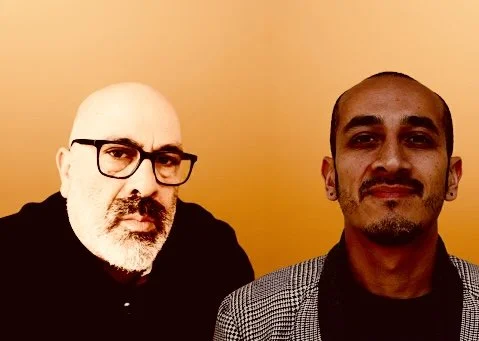
Details for Daniel Hernández:
Sergio’s Long Form Interview | Bio at the LA Times
Sergio C. Muñoz is a Mexican banker writing on Latina/o Prosperity. His work has been featured in the US Hispanic Business Council; Caló, the Los Angeles Times, the OC Register, PBS, NPR, WNYC, Revista - Harvard Review of Latin America, Studio 360, Latino Leaders Magazine, Poder Hispanic, Animal Político & ¿México Cómo Vamos?
To support my work, please consider purchasing a sample of salt from our sponsor, Santa Prisca & Co: https://bit.ly/Intelatin - Many years ago, I studied the salt exchange with Jing Tio at Le Sanctuaire. I have also done special projects with the artisans cultivating in the Sea of Cortez and the Pangasinan region. This year, after a tasting menu with the CEO of Santa Prisca, hand harvested by salineros in Cuyutlán, Colima, Mexico, I am using this salt exclusively for all my high profile culinary tasting events.
Explore More Stories From America’s Small Business Community: Made in America