Ceci Bastida, Musician | Made in America
The following is the transcript of an interview between Sergio Muñoz and Ceci Bastida
Sergio: Please describe your childhood home?
It was a white house with greenish tiles. A backyard on the side of the house. It was a section of Baja Norte called Playas de Tijuana. I lived there with my mother, father and my two sisters. I lived there for 20 years since birth. It was a new neighborhood at the time and it wasn’t super crowded. I’d put it as middle-class. I shared a bedroom with my two sisters.
Sergio: When did you begin to have ideas about prosperity?
I don’t know that I had the proper language at the time. In some ways, I thought we were privileged but not as economically as well-off as some of my school friends. We went to private schools and although the schools are more affordable than they are in the United States; it wasn’t the same thing. There were all types of children there and you began to notice when you were out on playdates how they lived. I was shocked when I saw one of my schoolmates with a swimming pool. I thought that was out of my reach. But more than anything, we had a woman that would clean our house on the weekend and she had children and I could tell the economic differences between her children and me. And as Mexicans, we were close.
Sergio: When does music enter your life?
My mother played piano and so I would sit and watch her play. That made me want to learn to play the piano. I was around eight years old and I started to take lessons. I would practice at home and my mom would help me along. At around 15, I joined a band called Tijuana No as the keyboardist. We began gigging soon thereafter and it took some time but it began to do well. I saw more people coming to the shows but I always thought that it could have been bigger. We played in the US, Mexico, Germany and Spain. I started my solo career in 2008.
Sergio: What is your immigration story?
I moved to LA in 2001 without any papers. I was trying to make money in music to pay rent but it wasn’t working out so I moved to Mexico City. During my time in Mexico City, I was already dating my husband and since he was American, when we married I was able to begin my documentation in 2005.
Sergio: What does your home look like present-day?
It is hard to see the home from the street. It’s a green house with a lot of trees and plants. It has an orange door. It has large windows. They call it mid-century modern. It is in the suburbs of Los Angeles. It is not a big house but it is bigger than the house I grew up in Tijuana.
Sergio: Is there a connection between your former fantasy and your current reality?
Life in Mexico and life in the United States is very different. I don’t fantasize about stuff or to go shopping but I immediately relate it back to my daughter and what kind of opportunities we can provide her for her growth. I define success in those terms. My daughter has way more going for her than I did at the same age. She takes ballet, she takes guitar, we manage to help her obtain whatever it is that she likes so that she can grow as a person.
Sergio: How is your business as a musician?
There is a big difference between how the music industry was when I started and now. You had to have a record label. Now you dont. But I was so young and I just wanted to have records out and to be able to play. I wasn’t thinking about the future. When I signed to a publishing company, I had a past debt from the Tijuana No days. If I signed as a solo artist twenty years later, I had to pay my share. It was around $20K. I told them to keep my songs. I’ve also seen really unfair 360 deals where they own everything and they give you a tiny advance.
Sergio: How did you make it work for you economically?
I don’t know that I have. I am constantly thinking of new ways to make a living as a musician. People have often helped me out and I have gotten syncs along the way that help me feel like I am also earning and not just spending on money. I’ve also written for TV. Its just not constant. After the pandemic, the money for concerts got lower and I saw bands that I thought were successful cancel their tours altogther. Spotify doesn’t want to pay if you don’t get a minimum of a certain number of streams. Its not ideal. When big artists signed deals before streaming platforms, they had a lot of money behind them. They also signed deals with brands. When you get big like that, you have a fanbase and so it makes things easier. An artist that is starting now, its really hard to stand out when you don’t have money machines behind you. I’ve seen most recently that your social media presence is more valuable than your music which is a bummer because it becomes your job. I have mixed feelings about social media, I think it has a purpose but I struggle with it. I put out an album in October and I was asked to put some work into my social media. Its a different landscape.
Sergio: Do you still sing entirely in Spanish?
Yes. The lyrics have always come out in Spanish. I haven’t had a song come out of me in English organically just yet. When I moved here and put out my first record, the managers and labels asked me when I was going to sing in English. This was before Spanish language music got so popular. At the time, they didn’t know what to do with me.
Sergio: What else do you want for yourself?
I want to play music at night, in the dark … a party with people standing and exchanging a lot of energy. Ultimately, I measure success by people wanting to connect with the music that I make. Anything that has to do with making a living through music is a great place to be. At this stage, its difficult to wonder if things will get better. My musical career and business could improve tremendously but my personal life with my family is very fortunate.
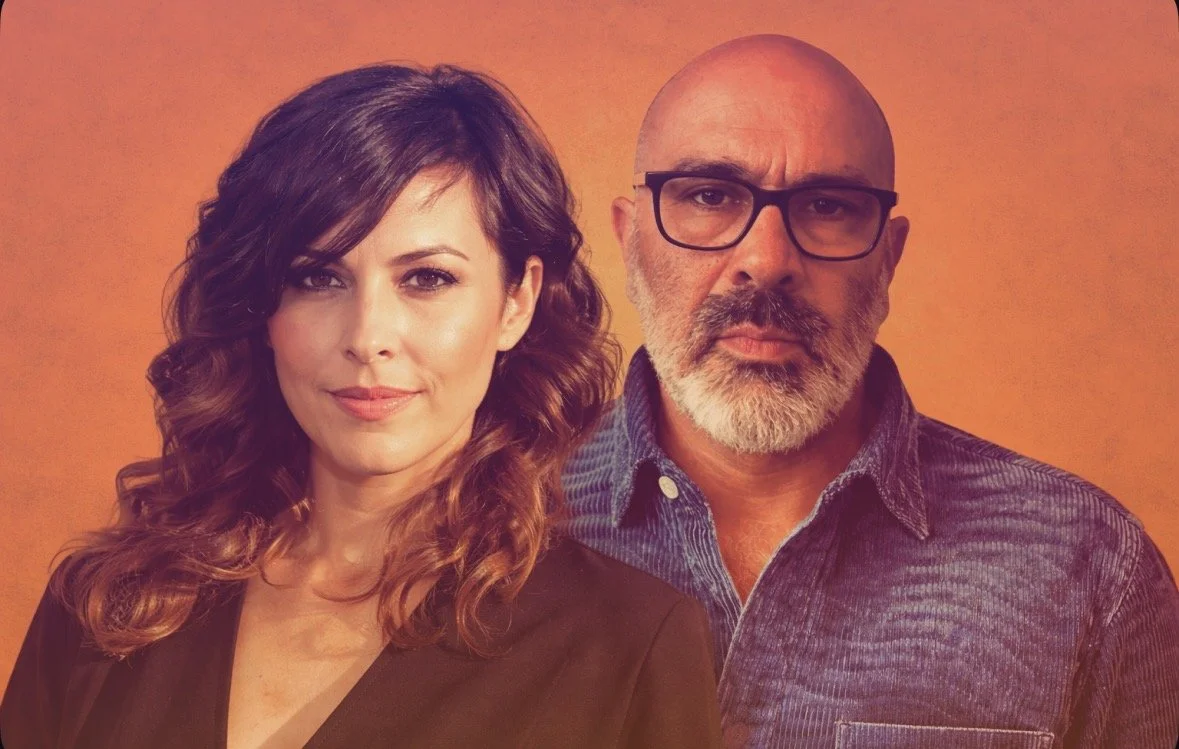
Details for Ceci Bastida:
Sergio’s Long Form Interview | Wiki | Insta
Sergio C. Muñoz is a Mexican banker writing on Latina/o Prosperity. His work has been featured in the US Hispanic Business Council; Caló, the Los Angeles Times, the OC Register, PBS, NPR, WNYC, Revista - Harvard Review of Latin America, Studio 360, Latino Leaders Magazine, Poder Hispanic, Animal Político & ¿México Cómo Vamos?
To support my work, please consider purchasing a sample of salt from our sponsor, Santa Prisca & Co: https://bit.ly/Intelatin - Many years ago, I studied the salt exchange with Jing Tio at Le Sanctuaire. I have also done special projects with the artisans cultivating in the Sea of Cortez and the Pangasinan region. This year, after a tasting menu with the CEO of Santa Prisca, hand harvested by salineros in Cuyutlán, Colima, Mexico, I am using this salt exclusively for all my high profile culinary tasting events.
Explore More Stories From America’s Small Business Community: Made in America