Dr Vicente Diaz, Academic | Made in America
The following is the transcript of an interview between Sergio Muñoz and Dr Vicente Diaz
Sergio: How do you identify?
I do not identify as an Indigenous Chamorro. I was born and raised in Guam to a Filipino father and to a Micronesian mother. Guam is part of the Caroline Islands in Micronesia and my mother is from in what is now a quasi independent nation. When I was younger, I identified as an American. I grew up as a jock. From study and in hindsight, the folks in Guam underwent an intense modernization and Americanization was the thing of the future and being Indigenous was considered of the past and not of value. After I was educated, I came to understand all this differently.
Sergio: Please describe your childhood home…
It is a cinder block, pre-fabricated home with storm shutters on the island of Guam. It is one story. It looks like a concrete pillbox. It is affordable public housing, part of the Urban Redevelopment. Every house in the block is the same except for the painting and we got to choose our color. My father painted ours bright blue but one time it was bright pink. It had a fence and grass. My mother and father were in the house, mom was from Micronesia and dad was from the Phillipines. They had 10 children and one bathroom. In our bedroom, we had a triple bunk and a cot. We shared a dresser where each of the boys got one drawer. My dad bought this home for $9,000 in 1967 and he didn’t pay it off until 2010.
Sergio: Educate me on the current status of Guam, pls
At the time that I was born, Guam, in the western Pacific was seized from Spain and it is a territory/colony of the United States. The Indigenous of the island are called Chamorros. After World War 2, it became a magnet for Pacific Islanders and Asians as a stepping stone to the United States. It is also a very active military base. It is multi-cultural and muti-ethnic. It is a tropical island that reminds folks of being in Honolulu.
Sergio: Let’s break that down later on, Dr. but who do you consider your community?
I do not identify by my parent’s heritage. I do have an Indigenous commitment and an identity that I have been reclaiming. Specifically to the Carolinian and to the Pohnpeian peoples but in solidarity with Indigenous people everywhere. I also identify as a Pacific Islander and I know many folks that are from Micronesia. And I do a lot of work with American Indian tribes here in the United States.
Sergio: When did you begin to fantasize about prosperity and did you tie your vision to an image of a home?
Although I lived in public projects, low cost housing, I never understood us as poor. Although I was aware that there were others that were of a higher economic class. My father was a lawyer but he wasn’t slick. He was a family man. He drove a junk car. Sometimes he was paid with produce from the farms. We ate modestly but we didn’t starve. I always wished we would have airconditioning and carpet. Cable and color television became the thing to have. We had it in Guam and for some reason, all of the programming came from southern California and the mainland came into focus through Cal Worthington and his dog spot. I knew which offramps to take to Cal Worthington or the Coliseum before I knew how to drive or what a freeway was. I’ll be very precise to your question: We were a close family and family is prosperity. A healthy family is a sign of success and wealth. My parents moved from the Phillipines to Guam after World War 2 so we didn’t grow up with extended family. We worked hard to build a solid foundation between the 12 of us.
Sergio: What is your immigration story to the mainland?
My parents believed in speaking English well and they impressed that on me. It was a very complicated mestizo mentality almost to the point of fantasy. The priviliging of the Iberian elite filtered through the Phillipines and then filtered through Mexico as New Spain. We were taught hispanicization too. But, to your question, I was a big jock and I went to play football in Hawai’i and I was asked to walk on to the football team at the University of Hawai’i. At one point, and I know the exact moment when I became an angry native instead of being a jock. And I got serious about my education. To make a long twisting story short, I did my undergraduate in Political Science and then I did my graduate studies at UC Santa Cruz. I did a doctorate their in interdisciplinary studies and the history of consciousness. I focused on Pacific Island Studies.
Sergio: Ok, I know we just jumped in your timeframe dramatically and I also know that there is much to dialogue of your evolution as a scholar and as a professor but, I must stick to the format of the series. So, Dr, during all this time, where did you live? In a rental or were you purchasing real estate?
My wife and I had a wonderful era when we lived in Champagne, Illinois and we bought and sold a home there. We bought it for the economic benefit and it was very bittersweet when we had to leave it. We have been renting prior and ever since. I do believe that there is an economic benefit to buying a home versus renting a home but we have made choices that have forced us into renting instead of buying.
I did over time develop a critique about real estate and the ownership of communally owned land became real estate via colonialism. Today, my critique is more fully developed and it incorporates radical revolution, decolonization and Indigenous everything. I’m approaching academia critically for its role in the production of knowledge about Native peoples to serve empire and colonialism. Read Edward Said’s book called Orientalism.
Sergio: Is there a connection between your former fantasy and your current reality?
I now have a very focused definition for prosperity. As Indigenous people, we have obligations that define what it means to be human. To live in kinship, to have reciprocity and with mutual care-giving. Our "Prosperity" is our authenticity to those obligations.
Sergio: Hijole Dr! That is very succinct and very deep. But how do you live with that authenticity to your obligations in Guam, in Honolulu, in Santa Cruz, in Michigan (City), in Champagne, in Minnesota, in Los Angeles?
It is a struggle. We are looking to live in a way that no longer exists.
Dr Vicente Diaz is a Professor at UCLA
American Indian Studies | Critical and Comparative Indigenous Theory and Practice in North America and Oceania, Indigenous Cultural Revitalization and Heritage Studies, Indigenous Technology and Ecological Knowledge (Indigenous Environmental Studies and Science (IESS), Indigenous Art, Science, and Critique, Indigenous Oral Histories
#Intelatin #USHBC
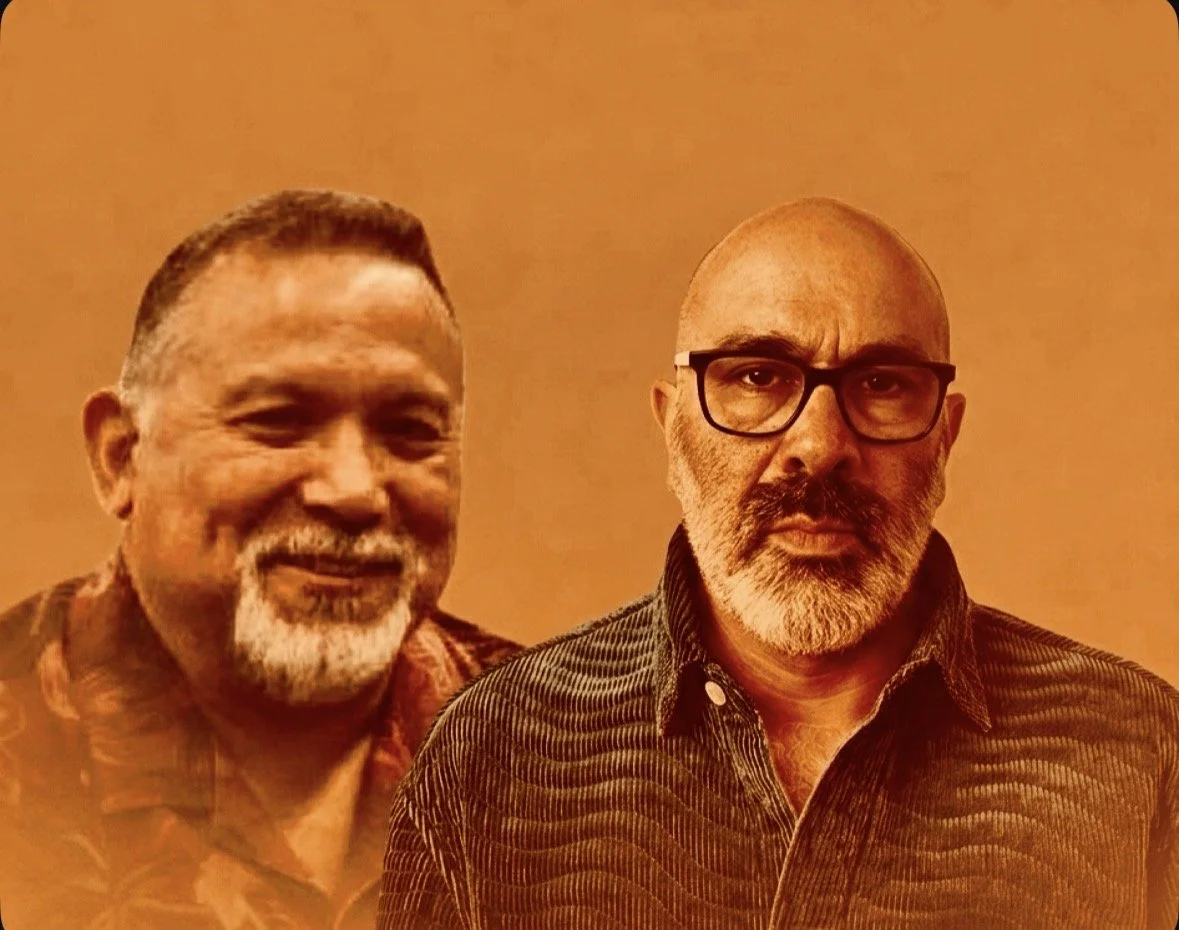
Details for Dr Diaz:
Sergio’s Long Form Interview | University Page
Sergio C. Muñoz is a Mexican banker writing on Latina/o Prosperity. His work has been featured in the US Hispanic Business Council; Caló, the Los Angeles Times, the OC Register, PBS, NPR, WNYC, Revista - Harvard Review of Latin America, Studio 360, Latino Leaders Magazine, Poder Hispanic, Animal Político & ¿México Cómo Vamos?
To support my work, please consider purchasing a sample of salt from our sponsor, Santa Prisca & Co: https://bit.ly/Intelatin - Many years ago, I studied the salt exchange with Jing Tio at Le Sanctuaire. I have also done special projects with the artisans cultivating in the Sea of Cortez and the Pangasinan region. This year, after a tasting menu with the CEO of Santa Prisca, hand harvested by salineros in Cuyutlán, Colima, Mexico, I am using this salt exclusively for all my high profile culinary tasting events.
Explore More Stories From America’s Small Business Community: Made in America