
Eblis Javier Álvarez - Musician | Made in America
The following is the transcript of an interview between Sergio Muñoz and Eblis Javier Álvarez
Sergio: I’d like to touch on complicated issues if you allow later on in the interview….
Eblis: As a musician, I find myself in situations that are not suited to my career. Especially as it relates to the verbal. I think it is necessary to have some compassion because my thing is music and not words.
Sergio: Ok Maestro, how do you identify?
Eblis: Espíritu Humano
Sergio: Pls describe your childhood house at 16YO….
Eblis: I was born in Bogotá. We lived in a multifamily apartment building. It was very communist looking like most of the buildings were in the 70s in Bogotá. It was salmon colored with yellow. Bogotá is very salmon colored. 80% of Bogotá is salmon colored brick. It had five floors with many apartments and we lived on the fifth floor. I lived there with my mother, father and two sisters.
Sergio: Did you understand your socio-economic position in Bogotá at the age of 16?
Eblis: Yes, more or less. I was very middle class but I studied at a school where there were lots of moneyed families. The reason being because my mother was a teacher there at that school. It was strange because I didn’t have that type of money but I was surrounded by folks that did. We talked a lot about classism and I could easily see how different my friends were when they had lots of money and when they didn’t. The society was very divided. I was also somewhat innocent because I didn’t understand all of these differences very well even if I could distinguish their differences while I was living my reality.
Sergio: Was there music in your life at this time?
Eblis: Yes, I was already a musician. I had already been educated in music at this age. I played classical guitar and I was already performing. I knew that I wanted to become a musician when I was an adult. I wanted to play jazz, classical music, and eventually prog rock. I looked up to Antonio Arnedo, a jazz saxophonist that was very recognized in Colombia.
Sergio: What was expected of you at the age of 18?
Eblis: To play my guitar, to study music, to jam. I was expected to learn the science of music. I was very protected by my parents. They supported me in all that I did and all I wanted to do was study music. I studied at two universities, at the National Conservatory and also at the Javieriana. I graduated in 2001.
Sergio: I believe that as a musician you have a magic that allows you to get very exciting and valuable media coverage in the highest of publications like The New Yorker and the New York Times. Do you agree?
Eblis: I am very happy that I get coverage. I do enjoy being able to develop my career as a musician and I have an artistic route where I have my own goals. The media coverage is part of the public domain but I have private goals too. Like, I want to explore musical frontiers that do not yet exist. In the whole spectrum of music, harmonies, rhythms, etc.….
Sergio: I listened to your new disc with Mexican Institute of Sound and Beck, for the album Ruido Tovar. And I know that you have a concert in Los Angeles in August at the Regency. Let’s start with this: Are you happy with your position in the music industry in 2026?
Eblis: Yes, I am very satisfied. I didn’t ever expect to have a career in music, like a touring musician that sells music. I have been to Los Angeles five times. Every time I go to perform in LA, I feel like it’s the “Top.”
Sergio: Pls describe the home where you live present-day in Bogotá…
Eblis: I live in a 4/3 brick house that is salmon colored. It has a music studio and I live there with my wife. I own this house but it is the second home that I have purchased. Prior to this, I bought an apartment.
Sergio: It sounds like you learned to do economic laddering. Is that correct?
Eblis: Yes, I think everybody has the goal of owning their own home. I was very happy when I purchased my first apartment. It gave me a lot of satisfaction. I purchased it at 33YO. Bogotá is full of musicians and there are many factors that go into whether a musician has enough income to own a house.
Sergio: Most of the time, when I interview musicians in Latin America, they also have a second career to supplement their income as musicians. Most of the time it is where they show their entrepreneurship.
Eblis: I also had a second career for the last twenty years. I was a professor of music and I thought that was what I was going to do with my life. When I began to generate income as a musician, I felt that was extra. I retired from being a professor about five years ago. I wasn’t so much an entrepreneur, more like an employee. The university employed me. As a musician, I have received a lot of grants. Both in Colombia and in Denmark where I was studying my post-graduate degrees in music. When I won the National Composition Grant in Colombia and when I won a Grant from the Danish Institute for the Arts, I was able to start my economic life. I was also an employee at a software company. I don’t feel that I had to struggle in the music industry at a young age. At a young age, I was only performing local concerts. Even with all this, I wouldn’t say that I know a lot about finances, I live with only what is necessary, including with my instruments.
Sergio: I am curious to come back to what you mention is the “Top.” It could be argued that Coachella is the “Top.” And this year, a Colombian artist was headlining Coachella. Do you have any thoughts on the incredible achievements of Karol G.
Eblis: As a Colombian, I am informed on Karol G and I think it’s a tremendous achievement but I don’t really listen to that type of music. I admire her greatly though from the point of view that when you have such success with your career, it means that you have had to struggle a lot to make it to the top. I think it’s incredible.
Sergio: When Colombia is mentioned in the mainstream media in the United States, the news is really an atrocious coverage of life in Colombia. Do you have an opinion about what life is like in 2026 in Colombia?
Eblis: It is a place with an emerging culture. This makes things difficult and it also provides a lot of opportunity. The regional cultures have a lot of differences and they have a lot of conflicts. And it is a passage for narcotics and so all of those conflicts become more accentuated by that reality. I think there is also a marriage between the political powers in Colombia and the narcotics industry. It is a complicated country but we have a lot of resources for the cultural arts, in music especially. I think Colombia has great music in the past, present and future. It has always had great potential, especially in the present. Since that is the case, it should have great music in the future too.
Sergio: Maestro, in terms of prosperity who is doing better, you at 16 or you at your current age?
Eblis: I would say the both of us are doing the same. I have been fortunate to be able to make music all of my life. I have always had a great support system. I have also had a lot of limitations so I was able to avoid both abundance and the opposite. I was never at zero and for folks that do not have anything at all have a tougher time to get started. I think that I was blessed to have enough to get started and also plenty of opportunities to create music. I have been lucky. Everyone has a destiny and everyone has opportunities throughout their life that reveal their destiny. I do believe that we all have an innate instinct and a sense to find our destiny.
Link: Eblis performs at The Regency in Los Angeles on August 5, 2026
#Intelatin #Media #Music #Colombia #MeridianBros
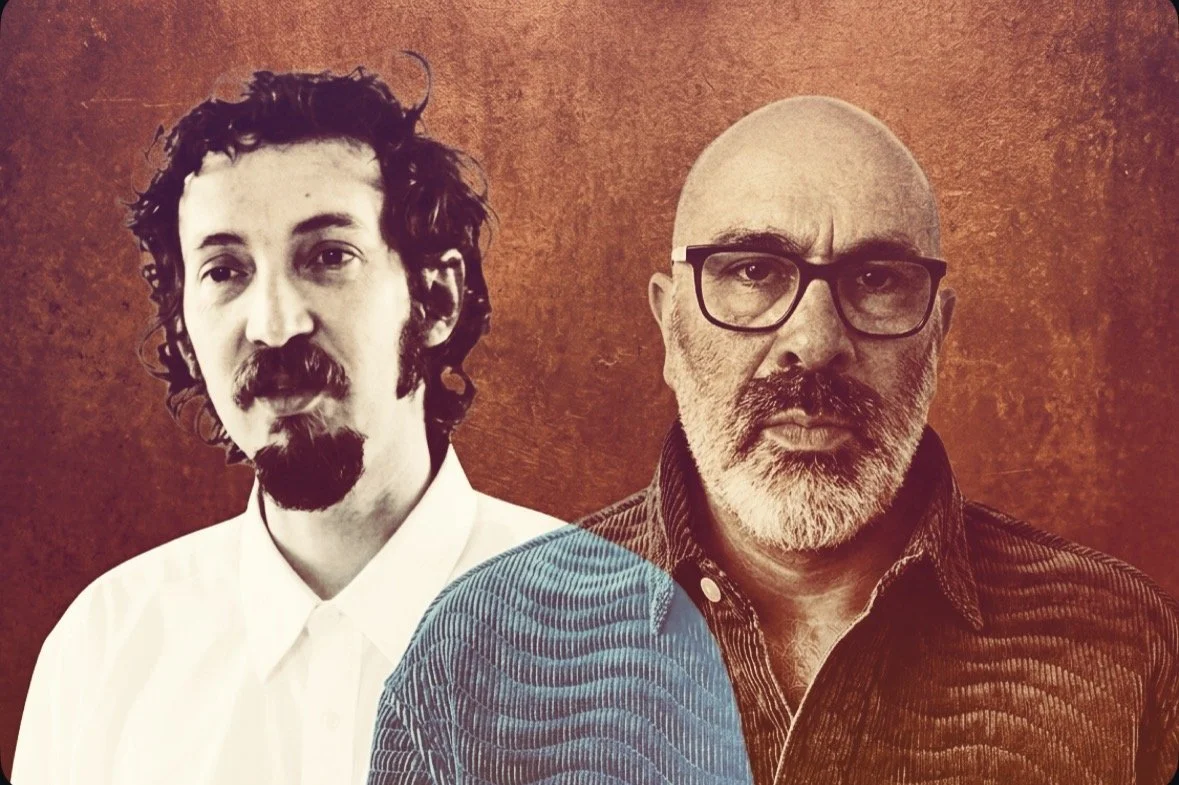
Sergio’s Long Form Interview | Eblis’ Feature in the New Yorker
Sergio C. Muñoz is a Mexican banker writing on Latina/o Prosperity. His work has been featured in the US Hispanic Business Council; Caló, the Los Angeles Times, the OC Register, PBS, NPR, WNYC, Revista - Harvard Review of Latin America, Studio 360, Latino Leaders Magazine, Poder Hispanic, Sopitas, Animal Político & ¿México Cómo Vamos?
To support my work, please consider purchasing a sample of salt from our sponsor, Santa Prisca & Co: https://bit.ly/Intelatin
Explore More Stories From America’s Small Business Community: Made in America