
Eva Aridjis Fuentes, Filmmaker & Entrepreneur | Made in America
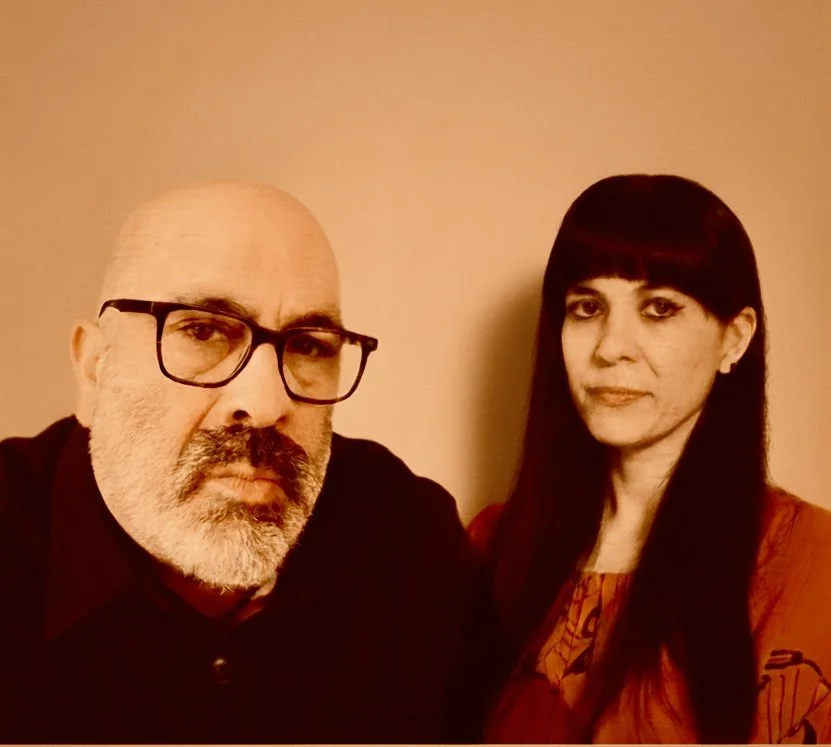
The following is the transcript of an interview between Sergio Munoz, founder of Intelatin, and Eva Aridjis Fuentes, a prominent filmmaker and entrepreneur.
Sergio: How do you identify?
Mexican American. My father is Mexican and my mother is American. I have both nationalities. I’ve lived in both countries. The bulk of my film work has been in Mexico. That is where I grew up and it has been the dominant part of my identity. I am a film director and a writer.
Sergio: Please describe your childhood home….
Mexico City, where my parents still live today. It is a small two story house painted brick red. Lots of trees and foliage. It is a very modest house in a wealthy neighborhood surrounded by much larger houses. My father is a poet so our house is modest. The street has a big hill and we were at the bottom of the hill in Las Lomas de Chapultepec. I lived there with both of my parents and my sister Chloe. And our dog.
Sergio: Tell me about your socio-economic perspective at age 16…
We were part of the small middle class of Mexico. In Mexico, there is a very large working class and then a very small upper class and then a middle class, contrary to the United States where I would say that most are middle class, in Mexico, most are working class but there is a small middle class. I went to the American School in Mexico City. It was mostly the politicians’ kids because it was considered the best school in terms of education. My sister and I were there on scholarship. My classmates had drivers, bodyguards, they would never wear the same thing twice. The boys didn’t care about their grades because they were going to inherit their daddy’s business and all the girls were going to marry the rich boys. I understood what privileged and wealthy looked like. Our neighborhood was surrounded by rich people. My sister and I were goths and we went to El Nueve and Tutti Frutti and we had friends who were artists and musicians and filmmakers. I also saw a lot of extreme poverty in my grandparents’ village in Michoacán. In the 80s, it was mostly peasants and agricultural workers before the great migration to the United States in the early 90s. Folks were extremely religious, very Catholic. They didn’t have much.
Sergio: Were you gravitating to the urban …. poetry and the visual arts … or Nature?
I love nature but I grew up in cities. Major cities like Mexico City and New York City. I do like cities a lot. I grew up reading, writing, painting, watching and listening to music, going to museums. I became a filmmaker because I couldn’t decide between writing, visual arts and music, and film was a good way to combine them all. Still, I love animals a lot. I have been a vegetarian since I was 10 and I am most in awe of Mother Nature.
- - -
I was impacted by a scene from The Silence of the Lambs because of the music playing along with the actions of the serial killer. It is, in my opinion, the most perfectly placed sync that I have ever witnessed.
In the scene, the audience has been waiting to better understand who the killer is and what his motivations might be. We see him in his dungeon-esque bedroom, cross dressing semi-naked and dancing to a beautiful song. As someone raised in the 80s, I was certain that the song was an obscure British new wave deep cut. Decades later, after the advent of YouTube, it became a song that folks could download from a random post because it didn’t seem readily available in the same way that The Cure, Tears for Fears, The Damned or even Grace Jones or Siouxsie and the Banshees were available at Tower Records. I downloaded it myself and I have placed it on several of my mixtapes but were anybody to ask me anything about the band, Q Lazzarus, I did not know what to say except to reference The Silence of the Lambs.
Again, decades later, in Winter 2025, I was surfing on the Criterion Channel in my Roku and I saw a tile for a documentary on Q Lazzarus. I thought: #mimeromole - - - I recognized the name Aridjis and I asked my father if he still kept in touch with Homero Aridjis, a poet that was famous in our house and was part of an intellectual group centered around UNAM. He told me that Homero had visited our home in Los Angeles in 1997 for an interview in the Los Angeles Times when he was elected President of PEN International. In his remembrances, he told me that Homero had two daughters that were “muy talentosas y que una de ellas hace películas que son muy aclamadas.” I put two and two together and I thought: I must have been living a parallel life with this filmmaker because my mother’s family is from Las Lomas de Chapultepec and my cousins were living in the highbrow world of art & film in New York City.
Now, just because I kinda knew the family of Eva and I knew one sync from Q Lazzarus, I was still not ready for the story of Q … Diane Luckey … and although Eva was kind enough to tell me some inside information about the film, it would contain major spoilers that I don’t think would be beneficial for the core audience of this documentary so I am going to skirt & edit around some of what she told me.
- - -
Sergio: In your work as a filmmaker, what happened after you decided what your subject was going to be?
It took five years from meeting Q to when it premiered at the Morelia Film Festival. I had no idea how crazy her story was going to be nor why she disappeared. At the time, I knew that there was a lot more music that nobody had ever heard and the documentary was going to end with her comeback concert in New York City with her original bandmates and she would get her happy ending on stage after thirty years. As documentaries are about real people with real lives, they never turn out the way you expect them to. Especially, if a pandemic hits while you are shooting your film.
Sergio: Your film showcases the worst case thanklessness of putting a beautiful song into the world and getting nothing financial in return. But ultimately, it is wonderful that the song was sync’d, right?
It’s a double sided curse and a blessing to be featured in The Silence of the Lambs. It’s such a horrifying scene. However, when folks remember the film, they don’t say that the Hannibal Lector stuff or the Jodie Foster stuff are the most memorable scenes, it’s the scene with Q Lazzarus’ music in the background. It gave the song cult status. I was probably around 16 at the cinema in Mexico City when I first heard it. Music people tuned into it.
Sergio: It seems daunting to compel young Latina/os to find your film at the Criterion Collection. Is that really the goal?
They can find the film on Vimeo; Amazon Prime or Criterion. We had a one week run in Los Angeles at the NuArt and we’ve played in several festivals too. I feel honored to be in the Criterion Collection. My producer pitched and licensed it to them and they fell in love with Q the way most people do when they see the film. They want more new documentaries on their platform so it’s been a great collaboration. I think my film, like the song, will have a cult following and it will have longevity because Q, as a protagonist, is so unique, powerful and memorable.
Sergio: Please describe where you live present-day…
I live in Brooklyn on the top floor of an eleven story brick building. It is almost a hundred years old. It is a residential area, there are lots of families, dogs, I am close to Prospect Park. There are a lot of brownstones and too much traffic. I live with my daughter and my dog.
Sergio: Looking back at the 16YO Eva and the type of prosperity that you are looking for in life, how do you define or understand your prosperity?
Film is a extremely complicated medium. I wish I worked in easier mediums so that I wouldn’t have to depend on so much money and so many people. Making a film is a miracle and once you make the film, there is no guarantee that there will be an audience for that film or that it will get distribution. It can feel thankless and very masochistic at times. It can also be very gratifying. Every project is different. I really love traveling, working with people, collaborating, creating beauty together. I love documentaries and going into somebody else’s world and you shine a light on them and try to make a difference in the world. It can be very frustrating and financially it’s not very rewarding but I value my time as an artist over having a stable paycheck. I think that is a huge luxury. I can go to a movie or a museum in the middle of the day. I am grateful to have that freedom.
#Intelatin #USHBC #Media #Film #EvaAridjisFuentes #QLazzarus #DianeLuckey
See the details for Goodbye Horses:
https://goodbyehorsesmovie.com/
Sergio C. Muñoz is a Mexican banker writing on Latina/o Prosperity. His work has been featured in the US Hispanic Business Council; Caló, the Los Angeles Times, the OC Register, PBS, NPR, WNYC, Revista - Harvard Review of Latin America, Studio 360, Latino Leaders Magazine, Poder Hispanic, Animal Político & ¿México Cómo Vamos?
To support my work, please consider purchasing a sample of salt from our sponsor, Santa Prisca & Co: https://bit.ly/Intelatin - Many years ago, I studied the salt exchange with Jing Tio at Le Sanctuaire. I have also done special projects with the artisans cultivating in the Sea of Cortez and the Pangasinan region. This year, after a tasting menu with the CEO of Santa Prisca, hand harvested by salineros in Cuyutlán, Colima, Mexico, I am using this salt exclusively for all my high profile culinary tasting events.
Explore More Stories From America’s Small Business Community: Made in America