
George Carrillo, CEO | Made in America
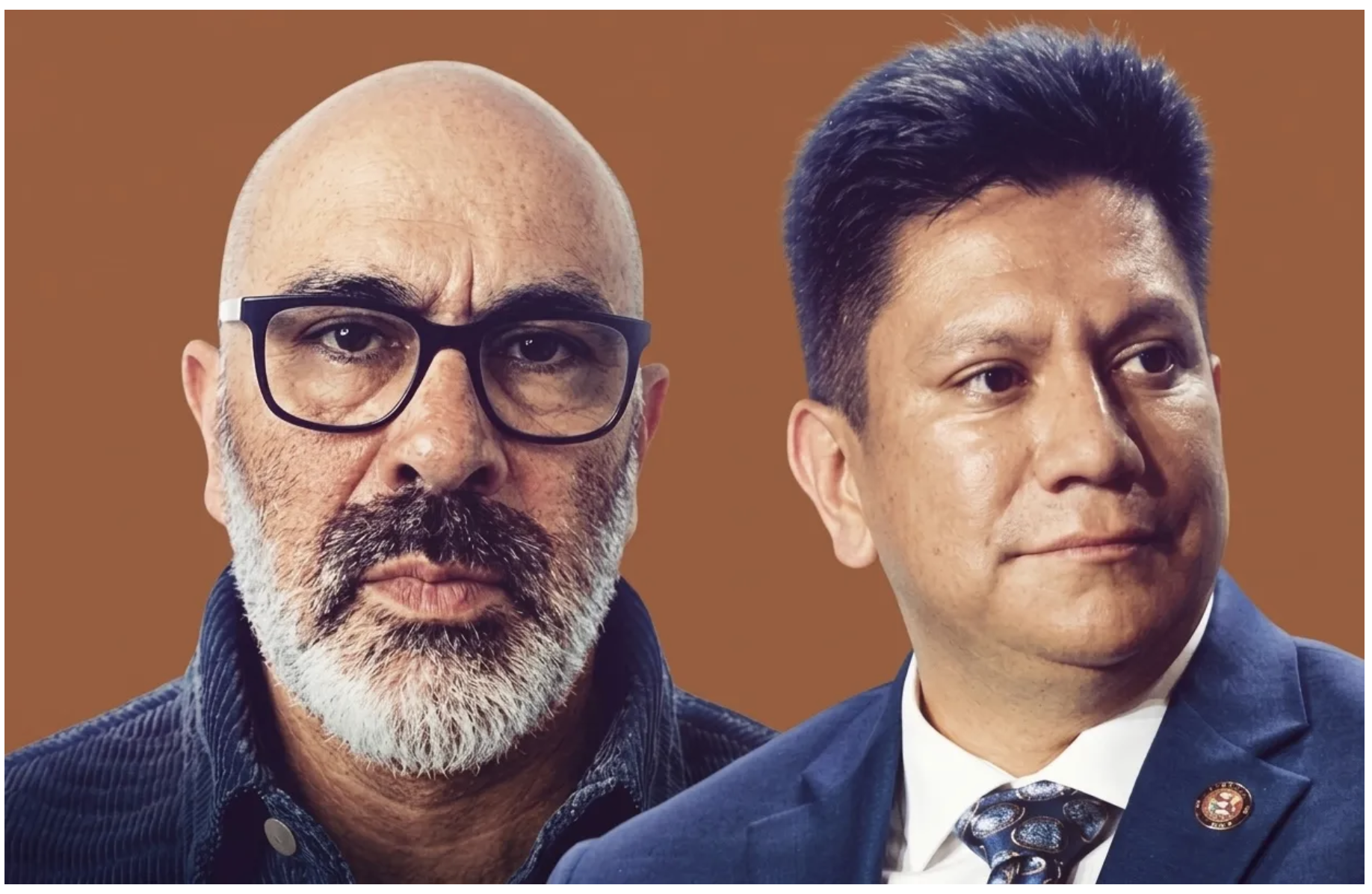
The following is the transcript of an interview between Sergio Muñoz and George Carrillo
Sergio: How do you identify?
George: I was born in Chicago and my family is from Ecuador. I am Latino American.
Sergio: Describe your childhood house….
George: 1,600 square feet with front yard. Bug window in the front of the house where the staircase was. We had a basement and two stories above. Traditional Chicago type of house. I lived there with my parents and my siblings but when I was ten years old, my three siblings had already left the house. My parents left Ecuador in the 50s with a work visa. My father was a dishwasher in Connecticut and he was offered a better job as a machinist in Chicago. They came from Ecuador to escape poverty and to separate from living with the in-laws.
Sergio: What was expected of you at 16YO?
George: To get up, do good in school and come home after school. There was no bussing system because I lived one mile from my school. I had to walk there and back at the age of ten. Sometimes the snow was up to my waist in the winter. I was raised to be independent and figuring things out on my own. My earliest memory of pre-school was that my sister dropped me off and that was the last time. My parents tried to be more present for me by working graveyard shifts but it was hard. Everyday was a full state of survival to make it through the day.
Sergio: What was expected of you during the transition after high school?
George: My high school guidance counselor advised me to follow my father into factory work. Other than that, I felt like I had no guidance and I was lost at graduation. High school was a struggle. I decided to begin working until I could figure things out. I started as a telemarketer for a mortgage company. I started making great money and eventually I became a loan officer in the nice part of the city. I was always wearing suit and tie at that age. I was hazed mercilessly by the other loan officers. It got so bad that my boss ended up isolating me to a different office and when I decided that I couldn’t take it any longer, I enlisted in the Marines.
Sergio: Tell us about the experience of being a Marine…
George: I told the recruiter at the Marines that I wanted to belong to something. In total, I spent six years in the Marines. It was a mixed bag. If I were to do it all over again, I would have gotten a degree and come in as an Officer. I didn’t fit in very well. I was able to develop great relationship. I pushed my body and my mind to the absolute limits and I have faced challenges that I will never talk about. Over all, I felt like the person to the left and right of me in the war zone had my trust 100%. We protected each other.
Sergio: You were intending to be a career Marine, right?
George: Yes. I re-enlisted and I became an instructor, interrogations, navigation, combat training. I got hurt during a deployment and I was past my 5 year marker. I failed an exam because of a tumor and I was given an honorable discharge. My career ended with paperwork that took three minutes to complete. I was not prepared to leave the Marines. I went into recovery in Arizona where my parents lived and began a new transition. I was 25YO at the time.
Sergio: Into the Police?
George: Yes, I graduated from college with honors and I became a police officer in Arizona. I was a cop for ten years. It felt like a very catastrophic time in my life. I got married and had a baby. My father passed away. It was a difficult, devastating time. Since my in-laws were in Portland, Oregon, we decided to move to Portland. For such a blue State, I came to discover that Portland is such an incredibly racist place. Built off of a white utopia. They struggle a lot with colorism. I could not get hired on the police force in Portland. It was an unbelievably challenging recruitment process. During this time, we hired a subcontractor to do some work on our house and every time the white subcontractor showed up with his Hispanic workers, they would ask me who the owner of the house was because they couldn’t believe that it was me.
Sergio: Where do you live present-day?
George: 1,700 square foot townhouse with a small front yard in Portland. Made of stucco. Three floors. Different from my childhood home in Chicago. I live in this home with my wife and my two kids.
Sergio: What is your work today?
George: I am the CEO of the Hispanic Construction Council (HCC). The mission of the association is: To provide representation to Latinos in the construction industry. We go against or we support legislation in DC to benefit four million workers in the construction industry. It is very entrepreneurial because you are always chasing funding.
Sergio: Do you represent the American workforce? From my perspective, an American born, Marine, Cop, former State level Health Official, CEO of a trade association, I think you make a great candidate as the representative of the future of America. What do you think?
George: I am, yes. My roots and who George is comes from my family culture in Ecuador. I bring that lived experience into every position that I have worked for. That part of me is a part of the American story. When I think of the American workforce, there are disparities in the leadership roles. They love to have us as workers but breaking the glass ceiling is more challenging. The overall number shows a major discrepancy. I have been trying to help people to break those ceilings. I struggle with how things are done, they are punitive, top down structure, its not very empowering. The more the role that I take on as a leader inspires loyalty and that produces better outcomes. I think that I am better suited for government and for nonprofit work than as a corporation. HCC doesn’t just look at Latinos and Construction. We look at the industry as a whole, we always trace back to health. Lets look at the suicide rates, the fatality rates, the graduation rates … when I was the Director for Social Determinants of Health, I learned to look at all the pieces of the individual. I am constantly in a balancing act with my work, my family, and myself in this political climate.
Sergio: Are you familiar with the Latino storyline of Landman? In the first season, there was a group of Latinos, construction worker types in the oil industry, in the Permian Basin. In a group of four workers, three were Latinos. By the end of the Season, all three Latinos were dead. And they died the most grizzly death imaginable on the job where there was no body to turn over to the moms and widows.
George: I haven’t seen it yet.
Sergio: The HCC has a national report coming out in April. How many Latina/os are in the construction industry?
George: 4.4M and about our presence as owners is about 90,000. We account for 7% of the total industry as business owners. The construction industry as a whole is very old. Latina/os are big in roofing and framing. The average age of a roofer is 48 so it is an aging workforce. If I, as a 47YO, wanted to own my construction business and secure that type of work, where would I get the access to capital?
Sergio: Let’s talk about my unicorn scenario:
There are 68M Latina/os in the USA. There are 4.4M Latina/os in the construction industry. Of those, 90,000 Latina/os are business owners. Of those, a tiny, tiny percentage are young, at around the 18. I want us to think of a scenario where we support one on their graduation day in June and by September, when they would have previously gone to college, they have their LLC ready to go and they are ready to subcontract with a company like MasTec so that they can begin building portions of the AI data centers in the Permian Basin of Texas.
George: Total unicorn situation. They are probably second or third generation. There is a lot of risk to that scenario.
Sergio: JP Morgan Chase just issued a press release about how they can support the younger generation to find the “American Dream.” It is called ADI. Let’s run one person through getting access to capital from the ADI. We all know it’s really hard to do but let’s just imagine it as possible.
George: There are plenty of individuals exiting the university path and looking for direction. The construction industry is low barrier and that is useful. It is very demanding work and low paying when you start out. To make good money, you need apprenticeships, you need qualifications, certifications, you need all sorts of things to advance, have benefits, be a part of union. The industry in general has struggled to engage in the high school setting. The NFL, for example, creates a path through college and they do a lot of recruiting through a system to get you from point A to point C to make sure that if you are good enough, you make it. Even if it’s a small percentage of people who make it, the NFL invests money to find the next Tom Brady. The construction industry does not do that yet.
Sergio: After speaking with George, I asked Javier Palomarez for his macro-take on this unicorn scenario. Speaking speaking ahead of his fireside chat with Former Secretary of the Interior and Former Ambassador to Mexico Ken Salazar at EarthX, this is what Javier told me:
“Initiatives like this are emerging across a variety of sectors and industries. These include JP Morgan's American Dream Initiative, Verizon's Small Business Digital Readiness Program and Capital One's Business Resources Suite. The programs that educate young entrepreneurs and provide them with previously inaccessible opportunities are not just beneficial, they are necessary for our economy's well-being. Our nation is powered by small businesses, which create two thirds of net new jobs and generate roughly half of our GDP. Historically, education, access to capital and general access to various resources have been issues for these entrepreneurs, especially in their early stages. This is particularly true for the Hispanic community, which as an example, receives loan approval half as often despite comparable credit and revenue. The sooner we can bring resources, education and access to capital to these entrepreneurs, the sooner they can contribute to our economy and ultimately build prosperity.”
Sergio: After speaking with Javier, I asked Tayde Aburto for his micro-take on this unicorn scenario. Here is the starting point of our dialogue. You have a son who is going to turn 18 soon, do you think that he believes in the American Dream in the same way that you believe in it?
Tayde: I want to believe so. My son has been blessed to travel to many countries at a young age. He has explored different cities around the world. Most recently, we did a trip to look at colleges throughout the United States and he realized that he has a very unique opportunity. When we talk about it together, it gives me the impression that he does.
Sergio: So, do you think that he believes that a college education in the United States is going to be exceptional in comparison to a university degree anywhere else in the world?
Tayde: Yes, if he picks the right college. He wants to major in Business. If he ends up going to a university with a strong business program. I say this but I do believe that there are exceptional business programs that are competing with the USA, like the one that I went to, Tec de Monterrey in Morelia.
Sergio: Your wife is hyper-educated in Finance, you have a Bachelors, a Masters and all sorts of Executive Certificates. Do you think he believes that college is what is expected of him at 18?
Tayde: Yes, but at the same time, we are not married to the idea that he must earn a college degree. But he sees us with our degrees. He sees how much I think about education. He knows that I want a PhD from London School of Economics. He knows that I am headed to Dartmouth next week for a program. My son has witnessed this throughout his life. I believe that this experience has helped him to consider it. We want him to be a productive asset to society however that plays out.
Sergio: I think you and I went along the executive path but being an entrepreneur is a different path. The type of entrepreneur that is 18, incorporated, working in the construction industry, profiting from the goldrush of data centers in the Permian Basin, how do you see the difference between the two paths?
Tayde: A hybrid would be perfect. Studying for a college degree and experience with these types of verticals. I do like that idea of being a high school grad thinking about this option. Going to college is very expensive. Not everybody is going to be able to do it. I wouldn’t have been able to do it if I had not married my wife. She helped me get financially literate in ways that I didn’t know before I met her as a surfer in Ixtapa. This path is great to become one of the future entreprenuers right out of high school without having to worry about the cost of college. You will learn a lot of practical skills that will translate in so many of your experiences in business later in life.
Sergio: The United States is in a type of crisis mode where young people aren’t going into these fields. You know all the opportunities that we are discussing.
Tayde: I was not aware of all those opportunities. There should be a better way to promote these opportunities. I have been working with contractors recently for a project in my backyard. I am putting together a YouTube series to promote one of my entrepreneurial ventures: It is called the Salted Entrepreneur. Upon meeting this family of workers that built the studio for my series, I learned a lot about how the father is preparing his sons to take over the business and how the sons are adding their skillsets to their father’s business. I just think there is a need to promote these opportunities across the country.
Sergio: The Tu Futuro venture that you started is going on five years now, you also have the vantage point of your 17YO child, how do you see his futuro?
Tayde: I have a very Mexican way of thinking about my children: I work for them! I am going to support them as much as I can. I like to work hard, I like to give back, I don’t have a magic wand to educate children but my wife and I just want them to be productive assets to society. I am confident in their success. I am bullish on the future of Latino children in the United States. It doesn’t have to be the millionaire and billionaire lifestyle. I am just talking about a nice decent life enjoying the good things that abound around us.
#Intelatin #Media #Prosperity #USHBC #HCC #ADI
Sergio C. Muñoz is a Mexican banker writing on Latina/o Prosperity. His work has been featured in the US Hispanic Business Council; Caló, the Los Angeles Times, the OC Register, PBS, NPR, WNYC, Revista - Harvard Review of Latin America, Studio 360, Latino Leaders Magazine, Poder Hispanic, Animal Político & ¿México Cómo Vamos?
To support my work, please consider purchasing a sample of salt from our sponsor, Santa Prisca & Co: https://bit.ly/Intelatin - Many years ago, I studied the salt exchange with Jing Tio at Le Sanctuaire. I have also done special projects with the artisans cultivating in the Sea of Cortez and the Pangasinan region. This year, after a tasting menu with the CEO of Santa Prisca, hand harvested by salineros in Cuyutlán, Colima, Mexico, I am using this salt exclusively for all my high profile culinary tasting events.
Explore More Stories From America’s Small Business Community: Made in America