
Dr David Hayes-Bautista, Academic| Made in America
The following is the transcript of an interview between Sergio Muñoz and Dr David Hayes-Bautista
Sergio: Please tell me about where you grew up, Dr?
In my childhood, we moved around. Born in LA around the harbor, lots of places in LA. My dad was in the Navy and he got a job at Caltrans. We lived in a place that got flooded in LA. Then, El Monte, then City Terrace. At the age of 7, we moved to San Luis Obispo, outside of Morro Bay, in Baywood. I was in a one-room school. I was one of eight children in the school. I was the third grade kid. When I was 10, there was a heat wave and we moved to Yuba City. We almost died in a heat wave. At the time, Yuba City was inhabited by an ethnic group that has since disappeared. Also, Okies from Oklahoma. They were very different. I felt very out of place. I was dealing with racial narratives that I wasn’t equipped to understand at that age. In East LA, nobody asked me questions like: What was I? From fifth grade to high school, we lived there and then would come to East LA for the summer. It was a very uncomfortable experience living in Yuba City.
Sergio: How do you identify, Dr?
I am an 8th generation American of Mexican descent. Genus: Latino; Species: Chicano.
Sergio: Where are you economically in relation to others in Yuba City?
In the 1950s, I worked in the fields. I worked with crews of Braceros, with Okies and with migrant workers. The braceros had barracks to live in and meals three times per day. The okies slept in their cars. They would eat their earnings. Clearly, the Okies were the worst off. In Yuba City, it was a fairly horizontal town. My father was educated as an engineer. We were probably somewhere in the middle looking back. Things have changed a lot. When you move around, you see things and things are relative.
Sergio: Can you summarize your educational ambition?
When I was 10, my dad said I would be an engineer and I said, yes sir. Education was highly valued on both sides of my family and both sides of the border. I started at UC Davis, then got my Bachelors from UC Berkeley. Then got my Masters on the way, and my PhD at UC San Francisco. I got involved in a community clinic called Clinica de la Raza. I also studied at the medical center and we were the first sizable group to study medicine. I was the lone basic scientist. I was offered a position at UC Berkeley and in 1987, I got to UCLA. The Census at the time didn’t have the Latino identifier. We knew nothing about Latinos. So, I created a knowledge base about Latino health and Latino patient behaviors. Since I had been around the block a few times, they told me not to study Latino public health if I wanted to get tenure. I told them baloney! And I did what I wanted to do and got accelerated tenure.
Sergio: What does your home look like present-day?
I live in public housing in faculty housing in West LA, near to UCLA. Spanish tile with cactus garden. Overlooks Beverly Glen. 4 bedroom. I own the home but I don’t own the land. It’s kind of like a condominium. I made this decision because I wanted to live near to my work at UCLA. I didn’t want to spend hours a day on the freeway.
Sergio: Dr, when I ask you about “Prosperity,” do you have an opinion about the term?
There are lots of types of “Prosperity.” There is intellectual prosperity….
Sergio: Let’s stop there and dig into that because nobody in the Series has mentioned anything related to intellectual prosperity.
I set up my own research center. I don’t get a dollar from UCLA. I have to raise about a million dollars every year. So, once I raise my own funds, nobody tells me what I can and cannot study. I publish in peer reviewed journals. I am a very happy camper. Have you seen our reports about the Latino Gross Domestic Product? We have been releasing reports since 2015. We are the fifth largest economy in the world. That’s prosperity. There’s also health prosperity, economic prosperity. I have oodles of data at my office on the many ways that Latinos have prosperity.
Sergio: When I see Sol Trujillo and his friends making the claims that they are making with your research, I think some of it is misleading. I believe that if you take a generation, any generation, I will pick my own, Gen X, and you begin to measure their wealth in comparison with other groups, you will find that Latino Gen X wealth in the USA does not measure up. Take investments for example: Here is the data for who owns investments in the stock market:
White Americans own 89.1% of stocks with a total value of $28.17 trillion.
Black Americans only own 1.1% of stocks, worth $360 billion.
Hispanic Americans own 0.5% of stocks, worth $160 billion.
Sergio: What say you, Dr?
We dive into that topic very deeply. Latinos do things differently. Latinos have the highest rate of labor force participation. We work more than anybody else. But we have the highest level of poverty. In policy, folks think that you have poverty because you don’t work hard enough but that’s not the case with Latinos. The answer is simple: We don’t get paid for our work. We have the middle class values more than any other group. The problem is, for the last 107 years, well we don’t even need to go back that far. If you wanted to buy a house in LA prior to 1970, there would be a restrictive covenant that disallowed Jews, Asians, Blacks and Latinos from owning a property in Los Angeles. Most houses said that. Then, to get financing in the 30s, mortgages were not available to those groups. The military. The colleges. For 107 years, we were excluding from investing-in.
We are now resetting the table. When I was a kid, we were 4% of the population, now we are 40%. When I wrote my first book, I saw this change coming. And it’s happened: 90% of Latinos graduate from high school. 66% go on to college. Latino wealth has been increasing rapidly. Even during Covid. Yes, we lag in certain areas but others didn’t have to deal with restrictive covenants when we were set back in the race. We don’t need charity. As we speak, we are the best investment opportunity in this nation. We are the last best chance to drive economic growth for the United States economy in spite of 107 years of obstacles and barriers.
#Intelatin #Media #Prosperity
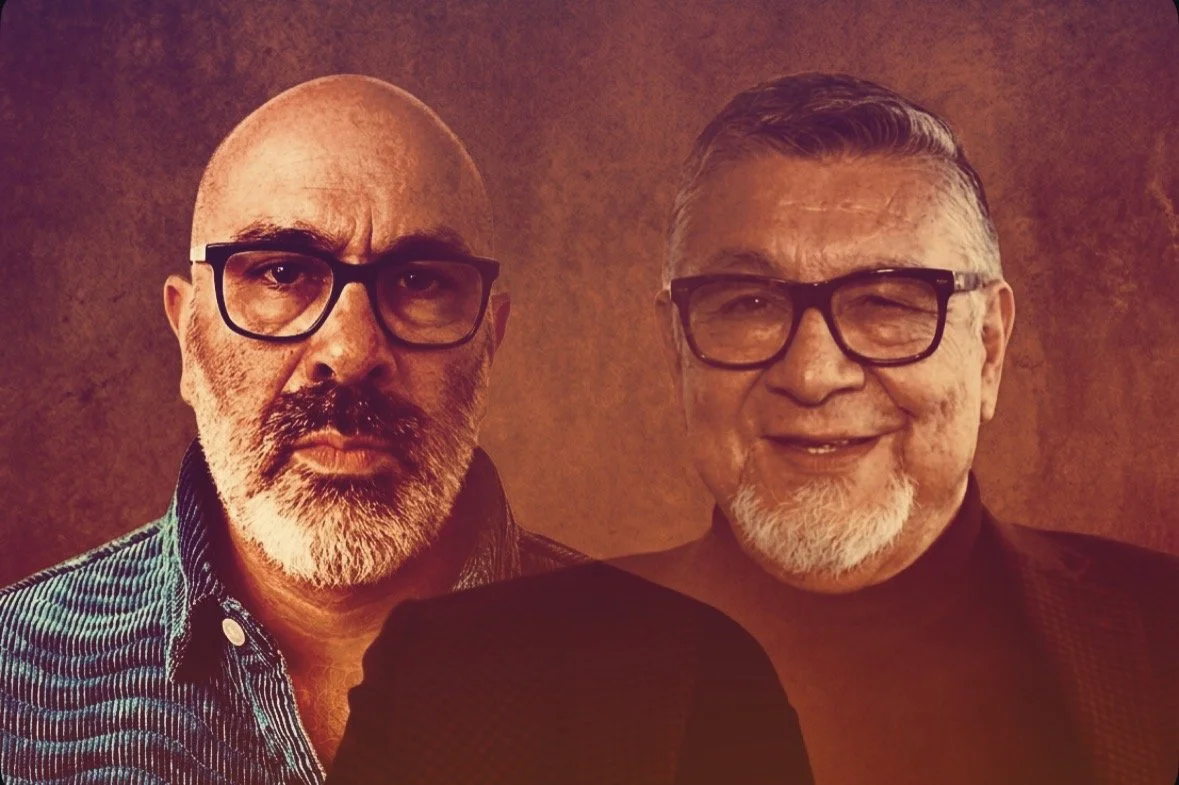
Sergio’s Long Form Interview | Dr David Hayes-Bautista
Sergio C. Muñoz is a Mexican banker writing on Latina/o Prosperity. His work has been featured in the US Hispanic Business Council; Caló, the Los Angeles Times, the OC Register, PBS, NPR, WNYC, Revista - Harvard Review of Latin America, Studio 360, Latino Leaders Magazine, Poder Hispanic, Animal Político & ¿México Cómo Vamos?
To support my work, please consider purchasing a sample of salt from our sponsor, Santa Prisca & Co: https://bit.ly/Intelatin - Many years ago, I studied the salt exchange with Jing Tio at Le Sanctuaire. I have also done special projects with the artisans cultivating in the Sea of Cortez and the Pangasinan region. This year, after a tasting menu with the CEO of Santa Prisca, hand harvested by salineros in Cuyutlán, Colima, Mexico, I am using this salt exclusively for all my high profile culinary tasting events.
Explore More Stories From America’s Small Business Community: Made in America