
Dr Christopher Garcés, Therapist | Made in America
The following is the transcript of an interview between Sergio Muñoz and Dr Christopher Garcés
Sergio: How do you identify, Dr?
I think all three of us, my father, mother and myself, identified as white. At least phenotypically white, but I see myself as differently Latino. A LatinX screwball.
Sergio: Please describe your childhood home?
A leafy suburban street facing a mid-century split level ranch home. Garage doors underneath. A boxy structure. The most nondescript house on the block. It’s a type of green with white. We were a small nuclear family of mom, dad, me, a dog, and a cat. It has 2 bedrooms. It’s a spare bungalow home built in the 30s. It is in the town of Larkspur in Marin County. My parents purchased it in 1969. They had to take a second mortgage out on their $27,000 home because they could not afford it. They owned it by the 2000s. My father was Spanish/Scottish/German, born in San Francisco. My mother’s French Ecuadorian, born in Paris.
Sergio: When did you begin to fantasize about prosperity and did you tie your vision to an image of a home?
I was clueless. I was kept very close to home. I was an unexpected precious object that landed in their laps and I think they wanted to co-experience the American life with their child. It felt like American-ness was a new acquisition. I was blissfully unaware about poverty or wealth disparity until my teenage years, when I became a student athlete on the swim team and I began to notice other swimmers and their homes. I may have noticed that Marin County was well-off, but I didn’t give a shit. I felt like we were all dealing with the same psycho-dynamic issues that I was dealing with.
Sergio: When does Ecuador come into your life?
I was traveling to Ecuador as a one-year-old. I feel that I was born with a passport and my parents had a diasporic outlook, which led them to cherish friends almost more than family. My mom lived distant from her relatives. Everybody was in Ecuador. She made a point of visiting every couple of years until my mid-teens. I always identified with Ecuador even if it wasn’t elected, but rather was a deep affinity. I am phenotypically white, blonde and with blue eyes, just like several of my cousins in Ecuador. Nobody considered me Ecuadorian even if I did.
Sergio: What does your home look like present-day?
About two years ago, I decided that I needed a mid-career pivot from being a lifelong academic. I had spent so much time between my Bachelors at UCSB, my Masters at George Washington University, my doctorate at Princeton, then working at Cornell as an assistant professor and in Ecuador as a research professor. During the pandemic and the Great Resignation, I decided that I wanted to return home to Larkspur and to look after my mom. I chose to become her caretaker and I started another Masters program to become an MFT psychotherapist, a marriage and family therapeutic counselor. I had tried for quite some time to include my family in my life on the east coast and in Ecuador, but decided at one point that life in California was undeniably great for her, and that I should be the one to relocate. So, I live right now in my childhood home.
Sergio: Did you feel what Dr Vicente Diaz calls an “obligation?”
Yes, a filial piety. An obligation is nested between a responsibility and reciprocal relationships. The frame seems to indicate a material and a moral responsibility. It is a type of debt that weighs on your mind and pulls on your heart strings. I decided that it was too important to be present for my widowed mom so I left all my professional obligations in the States and in Ecuador. I had been growing bored with my academic discipline as an Anthropologist. I made a considerable effort to explore social justice rubrics to decolonize knowledge and the mind. To re-center my discipline on how I generate wisdom for my field. To return to the value of authenticity. To be a partisan in this movement towards transformation. Dr Diaz emphasizes the weight of obligation with kin and with ancestors. I’ve been mulling over the way in which people, especially phenotypically white folks, marked by white settler culture, talk a mean game about God, Family, and Nation. Whiteness in the U.S. has become a powerful marker of ancestor-less-ness, a delinking to the land and to the dead that emphasizes the immediate (living) family. A lack of depth to ancestry and deep kinship obligations. I think that polite society in the United States doesn’t talk about this enough.
Sergio: White people are notoriously uncomfortable and unable to talk about this phenomenon of whiteness. Do you think it’s even possible to talk to them about this?
True but I believe I have a strange relationship to my own whiteness vis-a-vis my latinidad. Times are changing, and preference, self identification, privilege, and discrimination are changing along with them. I let people roll over their projections about me. I let them do as they wish. It places my identity authenticity in doubt among those that like to police those boundaries. I see myself as happy and I don’t need others' affirmations of me but I don’t think anybody feels whole right now. There is so much going on right now in this meta-crisis that we are all facing. I always feel more Protestant in Latin America and I feel more Catholic in the United States. A gringo in Ecuador and a Latino in the US. It’s rough sledding but I like to think that I am doing the best I can, and my dog loves me still.
Sergio: During all this time enveloped in academia in Santa Barbara, DC, Princeton, Cornell, Guayaquil, were you renting or owning?
In 2003, I inherited my grandfather’s office space in the central plaza in the heart of Guayaquil, and in 2012, I purchased a beautiful Cape Cod style wood clapboard split level home in Ithaca, New York. I sold both of them. The office space in Guayaquil, I sold this year in 2024 to help pay for my MFT.
Sergio: Is there a connection between your former fantasy and your current reality?
It sounds terribly woo but I am training in Jungian psychotherapy right now and I now think fullness of heart is the definition of prosperity. There are so many ways to be full hearted and I don’t think it costs an enormous investment. Standard issue definitions from most economic models seem bereft of being able to make people feel more fulfilled. I left the US during the Trump presidency. I found things moving in the direction of Soulless-ness; I moved to a neo-socialist country to work in a newly founded teachers college, and found that to be equally Soul-less. That was a terrible life lesson but one that I think was necessary and it has guided my vision of what prosperity looks like moving forward in my life.
#Intelatin #Media #Prosperity
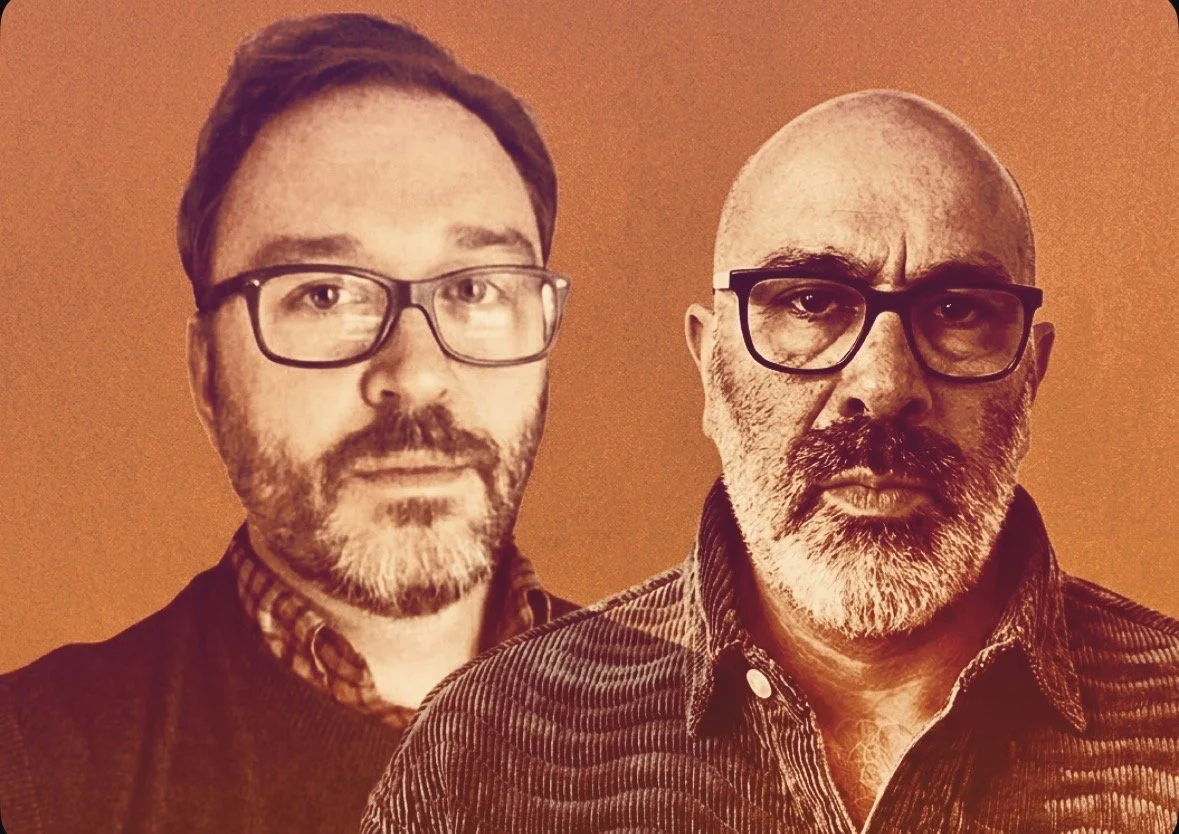
Sergio’s Long Form Interview | Dr Christopher Garcés
Sergio C. Muñoz is a Mexican banker writing on Latina/o Prosperity. His work has been featured in the US Hispanic Business Council; Caló, the Los Angeles Times, the OC Register, PBS, NPR, WNYC, Revista - Harvard Review of Latin America, Studio 360, Latino Leaders Magazine, Poder Hispanic, Animal Político & ¿México Cómo Vamos?
To support my work, please consider purchasing a sample of salt from our sponsor, Santa Prisca & Co: https://bit.ly/Intelatin - Many years ago, I studied the salt exchange with Jing Tio at Le Sanctuaire. I have also done special projects with the artisans cultivating in the Sea of Cortez and the Pangasinan region. This year, after a tasting menu with the CEO of Santa Prisca, hand harvested by salineros in Cuyutlán, Colima, Mexico, I am using this salt exclusively for all my high profile culinary tasting events.
Explore More Stories From America’s Small Business Community: Made in America