
Kinski Gallo - Musician | Made in America
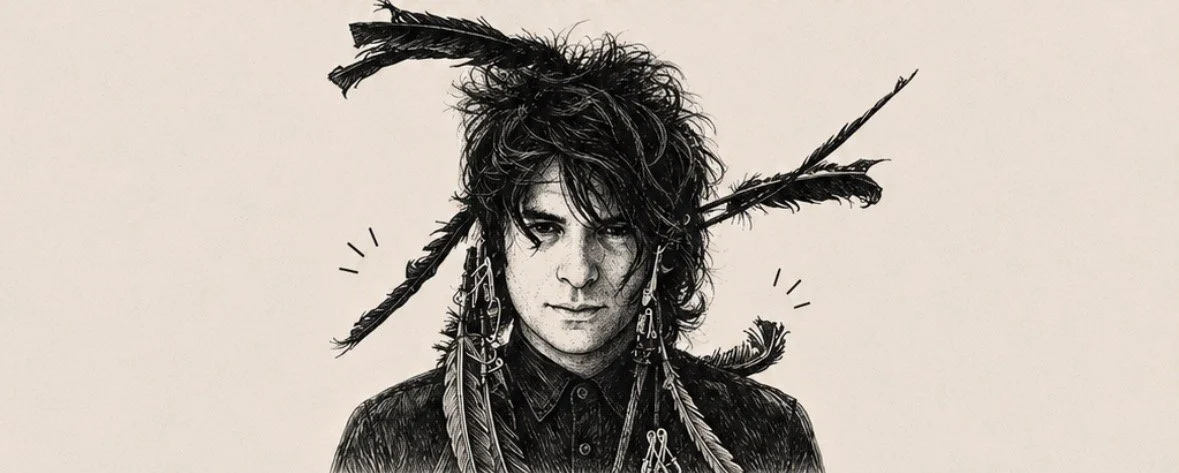
The following is the transcript of an interview between Sergio Muñoz and Kinski Gallo
Sergio: How do you identify?
Kinski: I was born in Guadalajara but I grew up in LA and I was exposed to grit and dirt. I love working with dirt. I like that nasty tension. Punks, weed, clean Mexican food at home. I am out in the world picando piedra. Now, either Mexico has changed or I have changed but neither of us is the same any longer. It’s both tragic and beautiful but I am Cali now. I don’t think I am a gringo but Cali has enough of Mexico to feed me my Mexican-ness. You know, I came to the USA with a passport and to see what is happening now in this country politically is very sad. It was a dream when I first came to the USA. Gold in the streets, man. But, Mexico … it’s just a beautiful memory for me.
Sergio: Tell me about the home where you lived at the age of 16…
Kinski: A two story beige cardboard apartment building about ten blocks from Venice beach. We lived on the bottom floor. Before the hipsters. I lived with my brother and his wife, plus, another brother. My parents weren’t with us in the home any more. I spent my times working and playing, skating, nerdy, punk, goth. When I came from Mexico, I thought that everything was very bland, very vanilla. My cousins lived in East LA and I spent time in Compton, I liked it where it was rough. I worked at SPARC in Venice at 16. I loved that job. It was the old jail and we were painting murals around LA.
Sergio: What was expected of you, or, what did you expect for yourself during that time?
Kinski: Nothing. Living in the moment. I quit high school, later on, I did go to college. I was very driven but I don’t have that weird American thing where I plan. I learned how to speak English through music. The Police, Michael Jackson, Elvis. My dream was to have a band to get signed. It took me thirty years to get signed and I achieved it. We ended up getting dropped but I felt that the accomplishment of getting signed was what I wanted to achieve. I have lived a charmed life.
Sergio: When does music enter your life?
Kinski: At 18, my brother and I started a band called, Anima. I am drawn to the feminine. I come from such a machista culture but my brother was gay and he was a big influence on me. I began studying about Carl Jung, Anima, I wore make-up, masks and I dressed in skirts, and I found it perplexing that men would find it uncomfortable. It was my fuck you to machisimo. I like to test limits playing live. When I was young, my father was a mariachi and a boxer. He had macho tendencies but he was respectful to all. I grew up on the rancho in Jalostotitlán and Tepatitlán, it’s crazy how amped up the machismo was in my world. The strongest people I know are feminine. People would get really creeped out by my stageshow. The band changed its name to Idol, then to Monte Negro. We paid our dues all over LA. We became phenomenal musicians. Epic signed us and bought our album as is. We toured for about ten years, about fifteen countries in total.
Sergio: Did you understand the business of being a musician and entrepreneur to negotiate with Epic at the age of 29?
Kinski: I struggled with the business. I know more now. In fact, the band broke up because of the monetary stress of the business. My brother and I were like the Oasis brothers. We didn’t have good management. We booked everything ourselves. Actually, I don’t think that music is made to make money. El cargo hace andar el burro. Touring was expensive. People think it’s a paid vacation. I did have a lot of great mentors and I had a lot of support. I own my publishing still. I still get good syncs. I just got one in a movie that is out right now. Everybody needs art in their life but making music is hard as a business. It’s not what drives me. I’m not trying to make a living at music. When I go to the studio and folks talk about money, I tell them to get the fuck out.
Sergio: You have a unique perspective about money….
Kinski: I think money is necessary. I have a helmet for business. Artists think that money is taboo. Motherfucker how do you pay your rent? I don’t have that hang up. I need it to create and I need it live. I have an architecture/construction business to make money.
Sergio: You have a lot of musical projects right?
Kinski: Yes, I am very promiscuous. My music is slightly vulgar with a hint of intelligence.
Sergio: Tell me about the home where you live present-day….
Kinski: I live in a very nice home that I flipped myself in Los Feliz. Trendy neighborhood. Its very expensive now but my wife and I worked really hard to get it many years ago. I can hike up into the mountains. It’s one of the nicest homes that I have ever experienced. It affects my psyche the way good architecture does. I have a very nice life. It is a one story, white, black, wood, nothing fancy on the outside. The fanciness is on the inside. Damascus style. I like that philosophy. Underplayed beauty, a diamond. A home that’s really dolled up on the outside is not for me. I live here with my wife and my two kids. Los Feliz has super residential, middle of the road and the double digit homes in the hills. I like that it’s a community, Armenians, Mexicans, hipsters. It’s like Europe or Mexico. Some towns in California aren’t like that.
Sergio: My town is about 90% from Michoacán…
Kinski: That’s different. I like the towns where you see old, young and everything in between. I like to experience life in a different form. My relationship to humanity is based around where I live.
Sergio: Who is doing better, Kinski Gallo at 16 or Kinski Gallo today?
Kinski: C’mon man! No contest. I don’t like to think about better or worse but I like having a mischief for living. Most people think I’m stupid and crazy but I don’t give a fuck. Nothing has changed. I am in my best life now. I am happier now though and I thought I was pretty cool at 16. I am more comfortable with myself. We don’t talk about that as men. It’s a process. I enjoy getting older.
#Intelatin #Media #Music #KinskiGallo
Sergio C. Muñoz is a Mexican banker writing on Latina/o Prosperity. His work has been featured in the US Hispanic Business Council; Caló, the Los Angeles Times, the OC Register, PBS, NPR, WNYC, Revista - Harvard Review of Latin America, Studio 360, Latino Leaders Magazine, Poder Hispanic, Sopitas, Animal Político & ¿México Cómo Vamos?
To support my work, please consider purchasing a sample of salt from our sponsor, Santa Prisca & Co: https://bit.ly/Intelatin
Explore More Stories From America’s Small Business Community: Made in America